
What is a Dog Place Board Used For?
What is a Dog Place Board Used For?
Place Boards are a training tool you can use to clearly communicate with your dog to achieve so many training goals, for example: a reliable recall, retrieve to hand, steadiness, and much more!
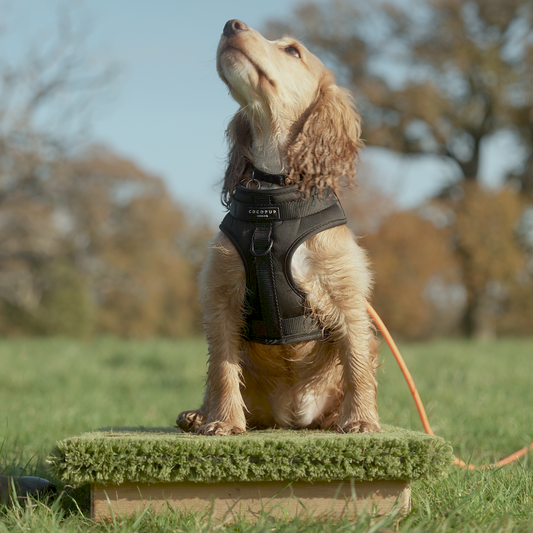
At Anglian Dog Works, we’ve seen over 900 dogs through our training programs. From high-drive Cocker Spaniels like our own Thea to pet gundogs like the Labrador like Darwin you'll see model the products for sale, the dog training platform is the single most effective tool we use to transform "wiggling" into "working."

What is a Dog Place Board?
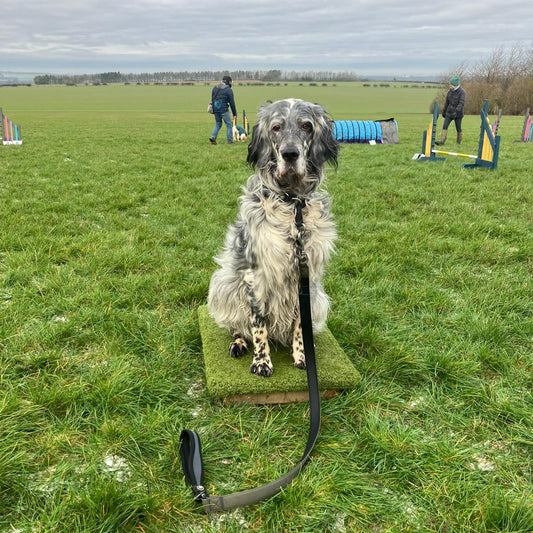
A place board is a specifically designed dog training platform used to support and structure canine behaviours. Unlike a dog bed—which is for "off-duty" relaxation—a place board is an "on-duty" training tool.
It is engineered so that dogs can hit it with drive and force without slipping. The dimensions are purposely narrow, designed to fit the dog perfectly in a seated position. This physical boundary creates a "lightbulb moment" for both the handler and the dog; it provides a clear, unmistakable target for the dog to aim for, ensuring they are always in the correct relation to the handler.
Why Precision Matters in Gundog Training (and Your Home)
In the world of gundog training, precision is everything.
Gold standard is a front present and retrieve to hand, not dropping a retrieve article on the floor.
The place board dog training method solves the "dancing out of reach" habit. By giving the dog a specific platform to return to, you create a "magnet" that communicates where you want them to be in relation to you.
- For the Gundog: It ensures a clean delivery to hand every time.
-
For the Pet Dog: it translates to a reliable recall. Whether you need to put a lead on near a busy road or simply want them back in the park, the board teaches them that "Come" means "Come all the way to me."

Building Unshakable Steadiness
One of the most valuable uses for a place board is teaching steadiness. We start by creating a sit-stay on the board and gradually increasing the duration. Once the dog is comfortable, we "proof" against distractions.
We increase the difficulty layers by:
- Adding our own movement
- Showing/throwing retrieve articles
- Introducing the sound of gunshots.
If all four paws remain on the board, mark and reward your dog. If they step off before being released, quietly reset them back onto the board without reward and repeat the exercise at an easier level.
This helps create a clear picture for your dog:
• On the board = reward
• Off the board = no outcome
Try not to view this as your dog being stubborn or getting it wrong; instead, take it as information that the exercise may have become too difficult too quickly.
Ask yourself:
• Was the duration too long?
• Was the distraction level too high?
• Was the movement too exciting?
Make the next repetition easier to help your dog stay successful.
Over time, this repetition builds valuable steadiness and impulse control that transfers into real-world situations, such as calmly waiting near roads or watching movement without immediately reacting.
The Anglian Dog Works Difference: Built by Pros
Not all platforms are created equal. You might see DIY platforms or cheap plastic alternatives, but these often lack the safety features required for high-drive, effective training.
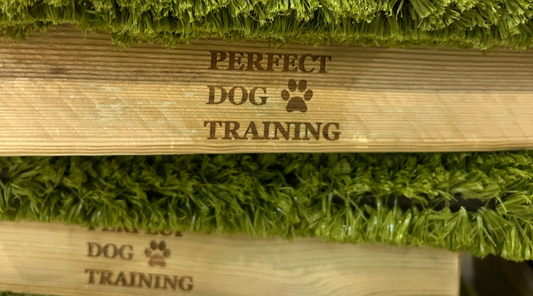
- Maximum Grip: Most cheap alternatives use smooth rubber designed for human shoes, which becomes dangerously slippery when wet. Our boards are topped with recycled artificial grass. This ensures your dog won't slip, even in the wet English weather, when jumping onto the board with enthusiasm.
- Eco-Conscious Ethics: We use sustainably sourced timber and eco-friendly recycled artificial grass. This saves material from landfills and reduces our carbon footprint while we ship our platforms nationally and internationally.
- Longevity: Our boards are built to last. We’ve had units in the field for over five years that are still going strong.
"Sturdy, well-made, and well thought out." — A common refrain in our 5-star reviews.
Read them here
Is Your Dog "Too Old" or "Too Stubborn"?
Since 2019, Emma—an accredited IMDT trainer and Kennel Club judge—has worked with nearly a thousand dogs. In that time, she has never found a dog that couldn't be trained.
"Stubborn" isn't a personality trait; it’s usually a lack of motivation or clear communication. Every dog is motivated by something. Whether they are a young pup or a veteran, the place board provides the clear communication they’ve been waiting for.
The T.A.R.G.E.T. Method: Your First 10 Minutes
If you want to get started, here's what we'd so in your first 10 minutes:
Focus on quality over quantity using the first part of our signature T.A.R.G.E.T. Method:
- T - Teach: Guide the dog onto the board and into a sit. Reward the position and use a "break" cue to release them.
- A - Testing Associations: Once the dog is off, wait and see what they offer. When the dog chooses to go back to the board on their own, you know they’ve formed a positive association.
-
R - Removing the Lure: Fade out the physical guidance.
What's next? Example: the "Home Base"
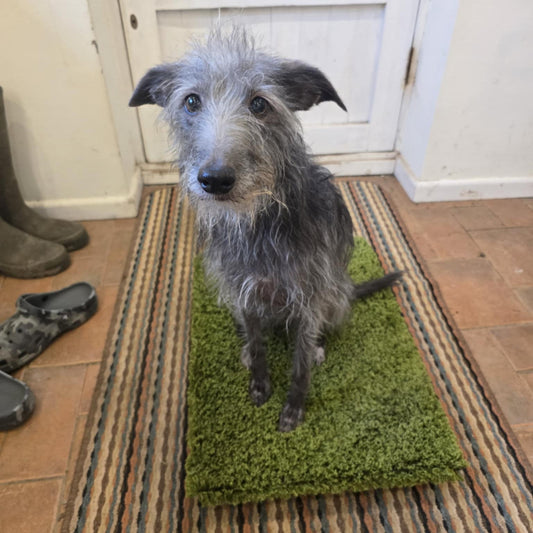
The place board is an incredible tool for household management. By placing one near the front door, you can train your dog to go to their "place" when the doorbell rings. Because the board has a higher "value" than a bed (every interaction with the board results in a reward), the dog is far more likely to stay there while guests enter, only greeting them when you give the release cue.
Check out our other dog blogs for more Place Board Training inspiration
Tags:
Related articles
-
May 25 2026
Is My Dog’s Place Board Too Small? A Trainer's Guide
-
Jan 01 2025
Creative Uses for Place Boards in Dog Training
-
Nov 21 2024
Can a Dog Be Trained in Just 2 Weeks? Yes, Here’s How!
-
Nov 21 2024