
Why Instinct Beats Obedience in Real-World Dog Training
Why Instinct Beats Obedience in Real-World Dog Training
Book Club Takeaways from Hunting Together
Your dog listens beautifully at home.
Then you step outside… and it’s like you don’t exist.
They’re running, chasing, sniffing, staring, or suddenly “deaf” because they’re busy doing something far more important.
This is where most owners are told:
-
“You need better treats”
-
“You need more control”
-
“They know what you’re asking, they’re just ignoring you”
But here’s the reality:
Without an appropriate channel, unmet natural instincts will come out in other ways.
Running.
Chasing.
Fixating.
Not hearing you at all.
It’s not enough to teach dogs what not to do.
To really “scratch the itch”, we have to give them safe opportunities to express natural behaviour — with us.
This post & why I’m calling it a book club
This post is part of a book club-style series, where I share takeaways from books that shape how I train dogs, paired with my own experience as a professional dog trainer, puppy trainer and gundog trainer based in Cambridge.
The book that inspired this one is Hunting Together by Simone Mueller.
You don’t need to have read it — everything here is explained in plain language and practical terms.
Why motivation disappears outside
Many owners struggle with motivation on walks or in training environments.
Food works indoors… then suddenly it doesn’t.
Toys get ignored.
Recall falls apart.
This isn’t stubbornness.
When dogs tip into instinctive behaviour:
-
Blood is diverted to the muscles
-
Digestion becomes less important
-
Appetite can drop completely
That’s why some dogs won’t take food outside — especially when movement, scent or wildlife is involved.
Food can be useful:
-
Eating can lower arousal
-
Searching for food can help dogs settle
-
It can bring dogs back into a thinking state
But food is not always the highest currency, especially when instinct is in full swing.
How to motivate your dog
To motivate a dog, we need to understand what actually feels good to them.
This is where the idea of the predatory sequence helps.
It’s simply a chain of natural behaviours that dogs find intrinsically rewarding:
SCENT / TRACK → STALK → CHASE → GRAB / BITE → CONSUME
Different breeds — and different individuals — find different parts of this sequence most satisfying.
That’s why one dog lives to sniff, while another only cares about movement.
When we play games that harness parts of this sequence, dogs:
-
engage with us
-
have fun
-
feel satisfied
-
build a stronger bond
Research your breed (and your dog)
Ask yourself:
What was my dog bred to do?
-
Chase?
-
Dig?
-
Scent?
-
Watch and stalk?
-
Retrieve?
-
Grab and hold?
Then give them safe, appropriate ways to do exactly that.
Some examples:
-
A shepherd who likes to stalk
→ allow them to stalk a toy on a flirt pole as it moves slowly along the floor -
A terrier who wants to grab and “kill” small furry things
→ tug games or tossing toys/treats to catch -
A bulldog or grabby dog
→ tug, hold-and-carry games -
A dog who loves shredding
→ stuff a lattice ball or box with fabric strips and treats to pull apart
This isn’t encouraging bad behaviour.
It’s meeting instinct before it spills over.
Why recall fails when instinct takes over
If recall only ever offers food — and food doesn’t match the emotional state — recall will fail in real life.
That doesn’t mean food is useless.
It means rewards need to match the moment.
Ask:
-
What does this dog love?
-
Sniffing?
-
Chasing?
-
Stalking?
-
Retrieving?
-
Holding?
-
The best rewards mimic the part of instinct your dog enjoys most.
Why punishment and control make it worse
When instinct takes over:
-
pain perception drops
-
dogs can push through discomfort
This is why corrections escalate and behaviour doesn’t improve.
Punishment tells a dog:
“That was wrong.”
It doesn’t tell them:
“Here’s what to do instead.”
Instinct doesn’t disappear — it just waits for another opportunity.
Catching the moment before the chase
Instinct doesn’t start with running.
It starts with:
-
freezing
-
scanning
-
intense sniffing
-
staring
This is the decision moment.
If you catch it here, you don’t need force — you can redirect.
Ritualised behaviour
Dogs regulate themselves better when the world is predictable.
This is where ritualised tools come in.
Rituals create:
-
Predictability
-
Safety
-
Faster emotional regulation
It answers the dog’s question:
“What happens now?”
Place boards explained simply
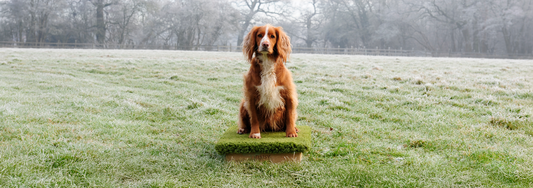
A place board is a raised, clearly defined surface that tells your dog:
“This is where your job is.”
Place boards:
-
give dogs something to do
-
anchor focus in stimulating environments
-
interrupt scanning and chasing
-
allow dogs to pause without pressure
They’re incredibly useful for:
-
puppies learning to settle
-
adolescent dogs
-
gundogs and high-instinct breeds
-
dogs who feel overwhelmed outdoors
This isn’t about obedience — it’s about clarity and communication.
Dopamine boxes & feeding boxes
A dopamine box (sometimes called a feeding box) taps into a dog’s natural love of searching.
Food is delivered when their head is in the box and can be timed with when they inhale.
This:
-
lowers arousal
-
encourages sniffing
-
helps dogs re-engage mentally
For dogs who struggle to eat outside, this can make all the difference. They recognise the tool, understand the job, and can settle enough to engage.
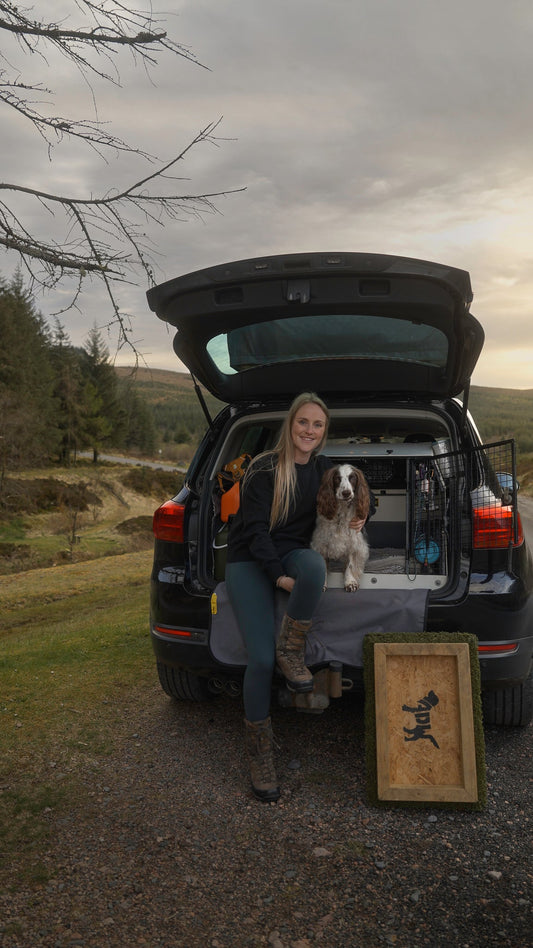
I use place boards and dopamine boxes daily in training, and they’re available at:
👉 https://angliandogworks.com
Gundog games for pet dogs
You don’t need a gundog to use gundog training.
These games work because they:
-
involve instinct
-
include the handler in the 'hunt'.
-
end in calm, not chaos
Examples include:
-
memory retrieves
-
controlled searching
-
scent games
-
quartering patterns
They improve recall, engagement and emotional regulation — not just obedience.
The takeaway
Your dog doesn’t need less instinct.
They need:
-
better outlets
-
clearer structure
-
rewards that make sense
-
opportunities to work with you
When instinct is met safely, behaviour improves naturally.
Walks don’t have to be about getting from A to B.
They can be opportunities to:
-
practise engagement
-
play instinct-based games
-
use place boards or dopamine boxes
-
reward check-ins
-
build focus in real environments
That’s where real-life training happens.
If you’d like help with this
If you’re struggling with:
-
recall
-
chasing
-
over-arousal
-
puppy training
-
instinct-driven behaviour
I’m Emma, a Cambridge-based puppy trainer and gundog trainer, and this is exactly what I help owners with.
You can explore place boards and dopamine boxes here:
👉 https://angliandogworks.com
Or read Hunting Together by Simone Mueller on Amazon
Tags:
Related articles

-
Feb 11 2025
Grade 1 Gundog Test: Training & Criteria Guide
-
Feb 11 2025
Teach Your Dog Left & Right Turns for Agility

-
Feb 10 2025
How to Train Wing Wraps in Dog Agility (Beginner Guide)
-
Jan 25 2025